
Bahrain, Saudi Arabia


Need help? Call us!


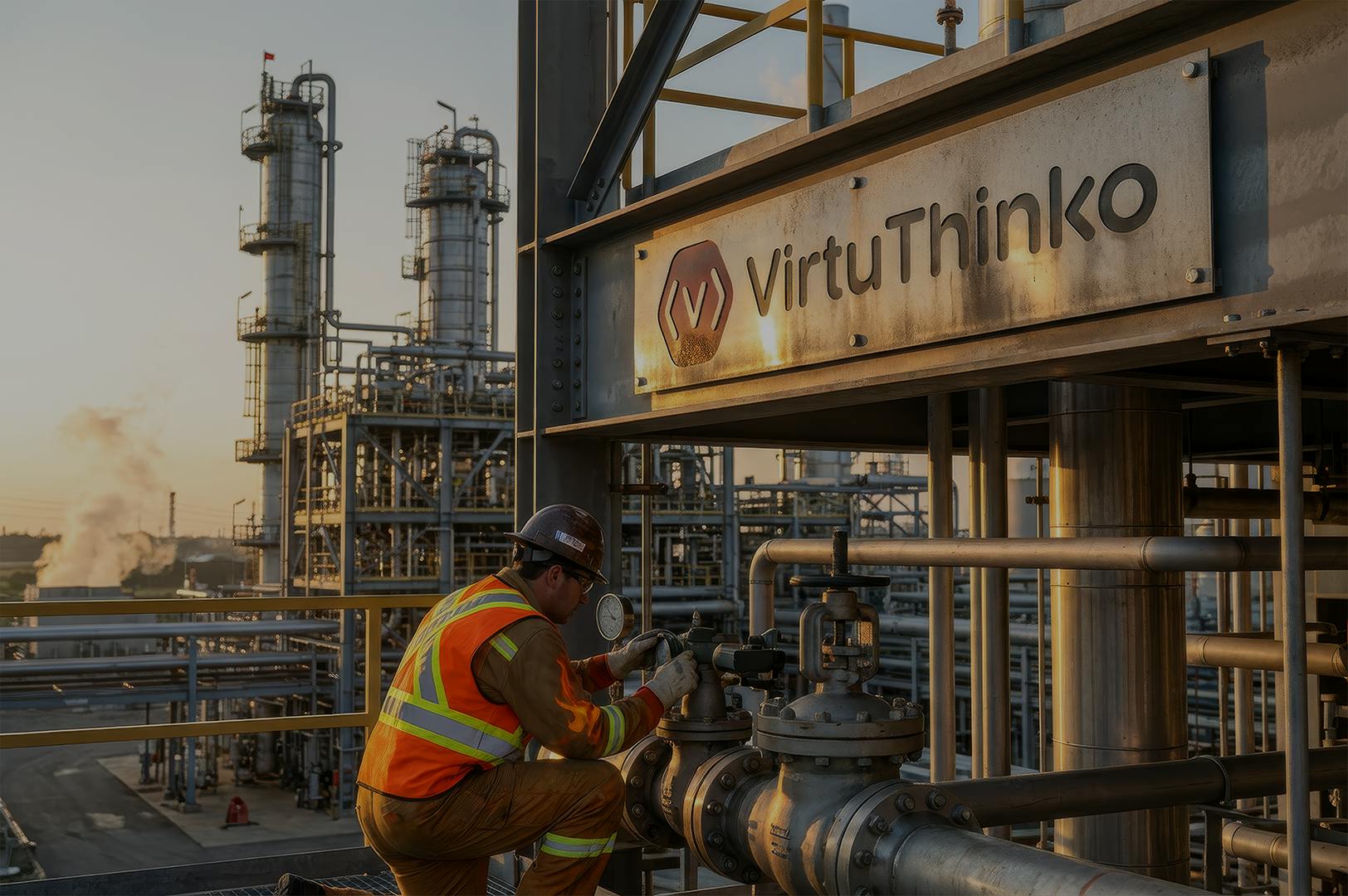
Securing the Oil & Gas Industry
Cyberattacks Targeting Oil & Gas
Oil and gas companies are key targets for cybercriminals due to their critical infrastructure, operational technology, and globally interconnected supply chains. From exploration to refining, every stage depends on digital systems that, if compromised, can disrupt operations, damage equipment, or halt production entirely. With increasing attacks on industrial control systems and remote sites, organizations must strengthen their cybersecurity posture to prevent operational failures, financial loss, and environmental risks.
State of the Oil & Gas Industry
$4.93 Million
Average cost of a data breach in the oil & gas sector in 2023
65%
oil & gas sector sector attacks involve operational technology (OT) systems
1,870
Global cyber incidents targeting oil & gas organizations in 2024
How VirtuThinko Helps the Oil & Gas Industry

Operational Technology (OT) Security
Secure industrial control systems by implementing strict access policies, monitoring device behavior, and preventing unauthorized software that could disrupt drilling, refining, or pipeline operations.

Data Protection Across Field & Remote Sites
Protect sensitive geological data, production reports, engineering files, and internal communications with policy-driven controls and strong encryption to reduce the risk of data exposure.

Third-Party & Supply Chain Security
Apply comprehensive validation and application controls to minimize risks from contractors, vendors, and remote technicians who often access critical systems during maintenance and field operations.

Securing Devices in Harsh Environments
Ensure that endpoints used in offshore platforms, refineries, and field operations meet security standards by blocking untrusted applications and enforcing safe configurations across all connected devices.
Protecting Sensitive Data in Oil & Gas
Oil and gas organizations must ensure the stability of critical operations while protecting sensitive engineering and production data. Implementing strong cybersecurity measures helps prevent operational disruptions, safeguard infrastructure, and maintain trust in a sector where downtime can have serious financial and environmental consequences.


Leading Transformative Technology Solutions and Services Company
About VirtuThinko
Solutions
Office Information

Office 42, Building 2383, Road 3643 Block 436 Seef Area, Bahrain

(+973) 7799 0006
Building 3257,Street:Al Imam Ali Ibn Abi Talib, Secondary No. 8517, Al Jamiyin Dist. Postal Code 32254 Dammam, Kingdom of


